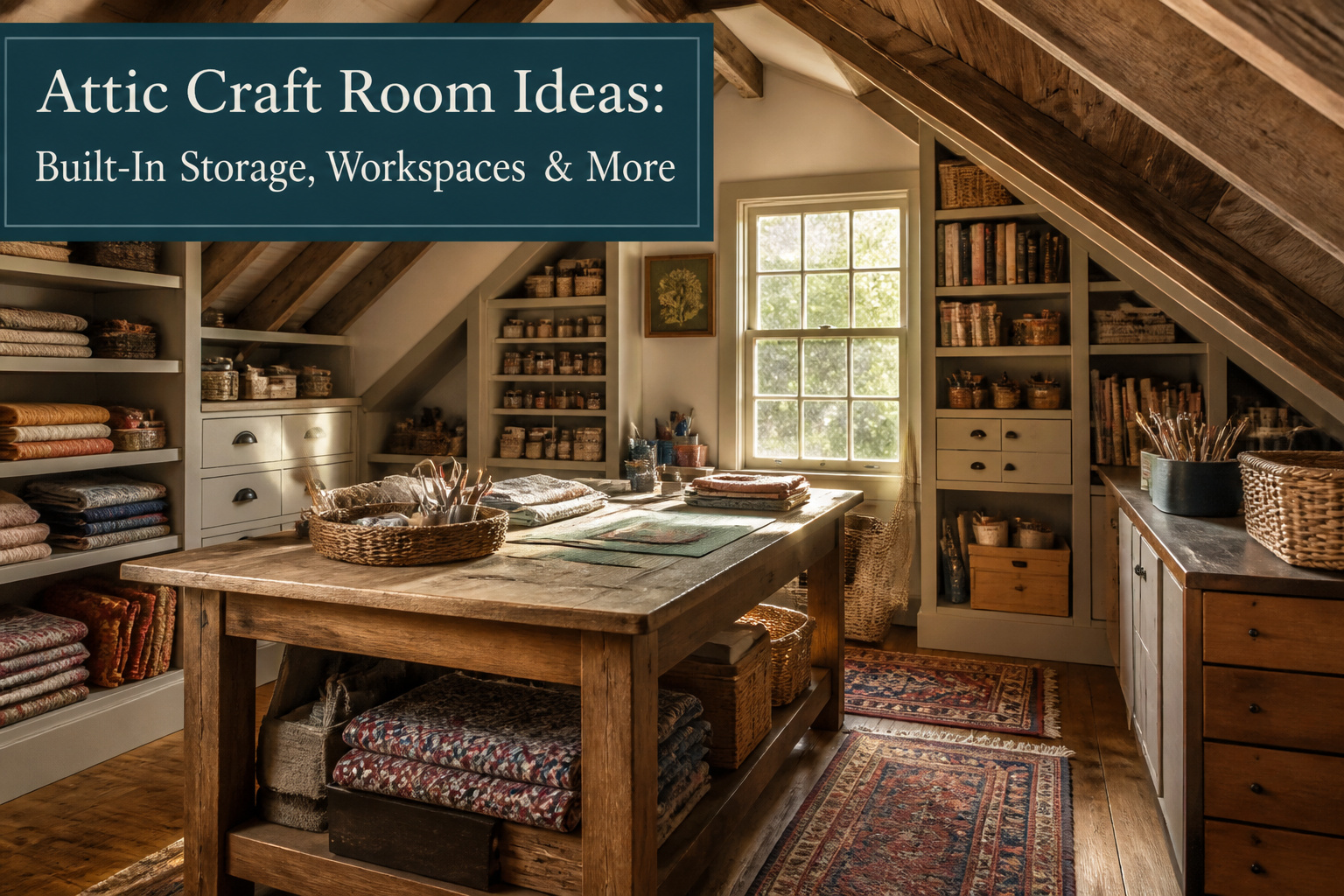
Attic craft rooms run from a $100 budget of baskets and bins to custom built-ins that swallow half the slope, and the deciding factor is whether you can stand upright where you need to work. The catch is that sloped ceilings drop faster than most people measure; one builder fit nine 15-inch deep dressers along a knee wall only by accepting that the back of each unit disappears into dead storage.
1. Built-In Storage Solutions

The first thing that vanishes in an attic craft room is flat wall space, so knee walls become your only chance at real storage. I had nine custom dressers built to fit mine, and the decision came down to depth. The 15" deep drawers are what actually hold fabric bolts upright and keep yarn from becoming a tangled nest. Anything shallower wastes the footprint; I considered unfinished pine dressers that were only 11 3/4" deep, but folded yardage stacks too high and topples.
Adjustable shelving matters more up here than in any room downstairs. Ceiling angles that start at four feet and slope to nothing make fixed shelves useless within two years; your stash changes, your tools change, and the only wall you have shrinks as you move toward the eaves. Brackets that move in two-inch increments let you reclaim vertical space that would otherwise stay empty.
What I did not anticipate was how the back of these units disappears. The cubbies deepest against the knee wall, where HVAC ducts already steal headroom, became long-term storage for photo boxes and out-of-season clothes in vacuum bags. The usable front stays daily-accessible. Sliding drawers on the opposite knee wall handle shorter hanging items, cropped tops and skirts above the knee, anything that clears the slope.
Recommended Products

Dimensions & Size: The storage drawers have outside dimensions of 12 7/8" x 8 7/8" x 6" and interior dimensions at the bottom of 12 1/8" x 6 1/2" x 4 1/4", making them perfect for storage needs.
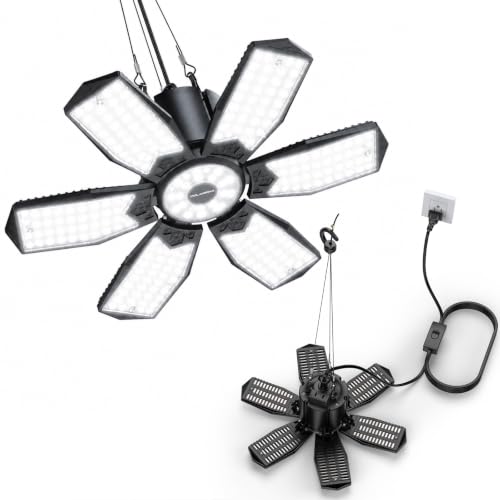
【Super Bright Daylight Coverage】POLARPRA plug in garage lights powered by premium energy-saving LED chips delivering 20,000 lumens of crisp 6500K daylight. Brightens every corner of your garage, workshop, or basement Laundry Room. Eliminates dim spots and eye strain for parking, repairs, or DIY projects.
2. Creative Workspaces

A desk tucked beneath a dormer window catches the best natural light an attic has to offer, which is why I ended up moving my sewing station twice before landing there. The first spot sat under the slope itself, and I spent six months hunched against a knee wall that cut my headroom to maybe four feet. My shoulders thanked me when I finally slid the table under the dormer instead; the ceiling there is still low, but the vertical space in front of the glass gives you room to sit up straight and actually see your work.
For the main surface, an old office table against the one large wall worked better than anything I tried to build into the eaves. You need the flat run of a full wall for spreading out, not the angled pinch where the roofline drops. I keep both machines out permanently now, with wall-mounted organizers above for the small stuff that used to drift into piles.
The real trick with attic desks is treating the knee wall as a boundary, not a bug. I wasted a weekend trying to notch a custom top around the slope before accepting that low-profile storage slides underneath just fine, and your legs go where the ceiling is tallest anyway. A comfortable, low-profile chair completes it; anything with a high back fights the angle behind you.
Recommended Products

Dimensions & Size: The storage carts and drawers have outside dimensions of 15 3/8" x 21 7/8" x 24 1/2" and interior dimensions at the bottom drawer of 13 1/8" x 19 1/8" x 7 1/8", providing ample space or your storage needs.

HOMZ for Your Home: From organization to storage, we have the container that you are looking for. Proudly made in the USA, allow us to make your house a HOMZ.
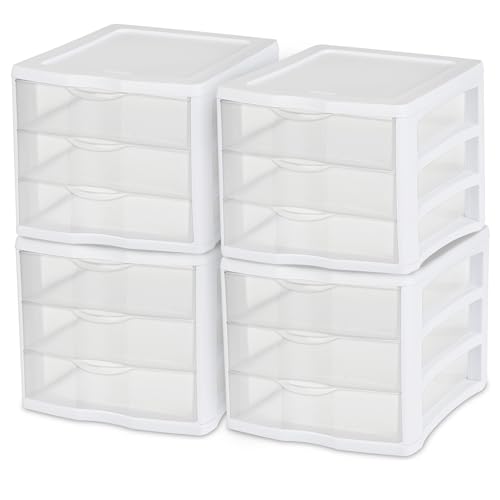
Versatile Home and Office Organization: These stackable drawers have dimensions of 13.5" x 11" x 9.6", making them suitable for use in bedrooms, bathrooms, pantries, desks, workshops, and other areas throughout your home or office
3. Lighting Options
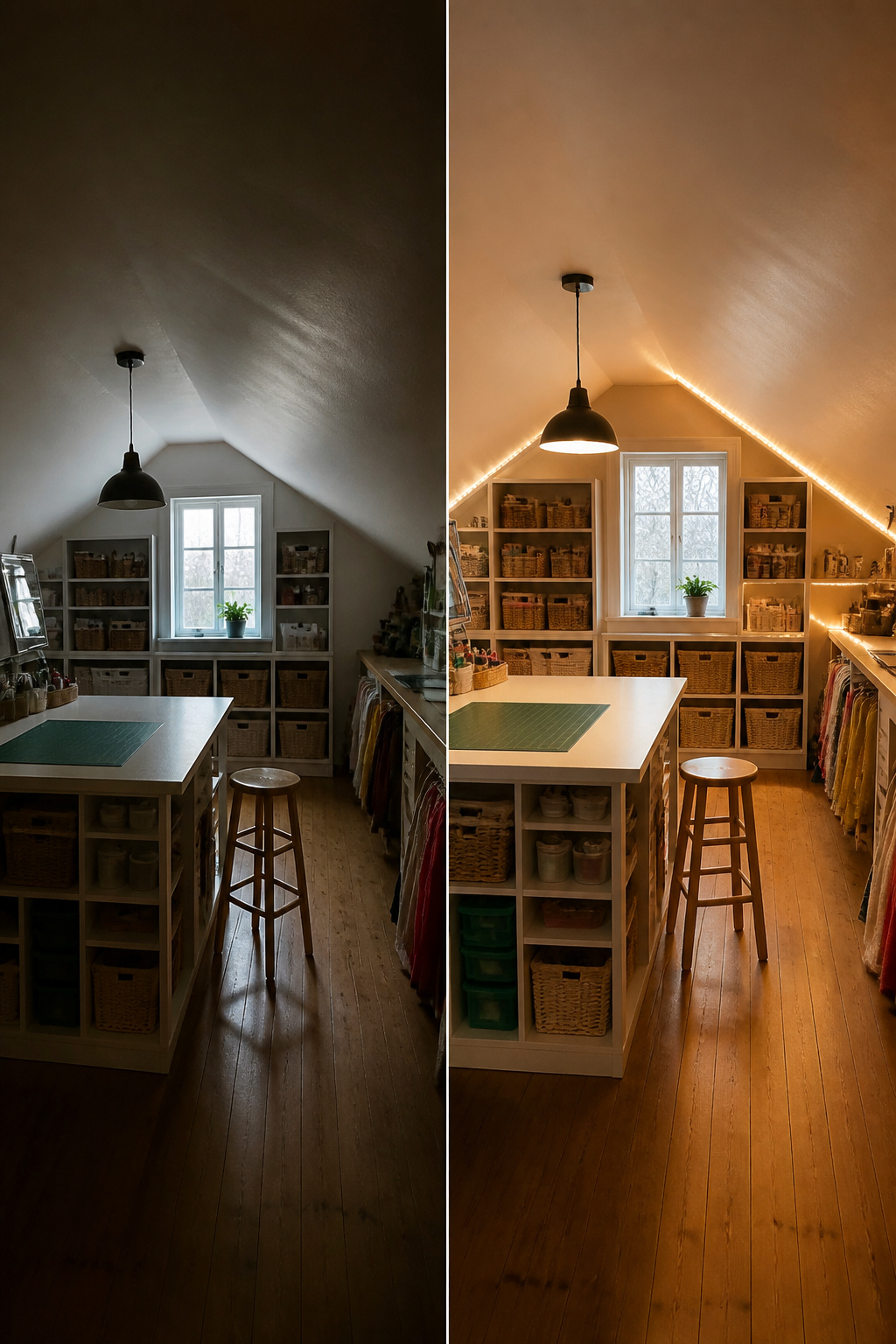
Lighting in an attic craft room needs to solve two problems at once: the sloped ceiling steals overhead space, and the angles throw shadows exactly where you need to see. I learned this the hard way trying to thread a needle under a dormer that looked bright from the doorway but turned into a cave once I sat down.
Battery-powered LED lights are the quickest fix for corners the main fixture will not reach. Stick-on strips under sloping roofs or inside deep cubbies run for months on a set of cells, and you can move them the day a project changes. For a permanent setup, an electrician can run wiring for overhead fixtures that sit flush with the ceiling or angle toward specific work zones. Motion-sensor switches save the fumble for a pull chain when your hands hold fabric or paint.
Warm LED strip lighting inside built-in shelving turns supply storage into something you actually want to look at. The same strips that illuminate each cubby from the passages above also keep small items from disappearing in shadow. Pendant lights over a desk or reading corner add task brightness without claiming headroom the slanted ceiling already took. The mix matters: overhead for safety, strips for display, and a directed task light for the detail work that ruins eyesight in dim corners.
Recommended Products

Sufficient Quantity: you will get 2 pieces of shelf rails for shelves and 6 pieces of double track brackets, sufficient quantity to meet your daily needs; Also comes with 8 pieces screws about 2 inches long and 8 pieces screws about 1.18 inches long for easy installation; Note: each shelf bracket can bear a maximum load of 25 kg, the shorter the length, the higher the load bearing capacity; It is mainly suitable for wardrobes

Designed to support wood shelves 11-inches to 14-inches deep. Brackets sold individually and hardware/tracks not included

Elegant Design: Enhance your living spaces with delta's black 5-tier, set of 10 wall shelf brackets, offering a clean and minimalistic design that seamlessly fits into any decor style. Add your own wood shelf for a sophisticated, modern shelving system.
4. Color Schemes and Decor

The first attic craft room I planned, I painted the sloped ceiling a deep teal I loved on a swatch. Within a week the space felt like a cave. Angled walls drink light differently than flat ones, and soft gray or blush pink bounces what natural light you have back into the room instead of absorbing it. White built-ins against either shade keep the eye moving upward, so the slope reads as architecture rather than a lid coming down.
Brass hardware and a crystal chandelier add just enough warmth to keep pale colors from feeling sterile; I would skip nickel or chrome in an attic, where the goal is cozy, not clinical. What surprised me was how much seasonal rotation mattered. Swapping a few cushions, a small rug, or a diffuser blend every few months keeps the room from becoming background noise you stop seeing. A metal pumpkin hiding the diffuser in fall, a clean citrus scent in January; the craft itself stays the same but the room feels current, and that freshness makes you want to walk upstairs and start something.
5. Organizational Tools

A $100 budget for visible storage goes fast, but it can cover the pieces that actually get used. A wooden organizer at $27.50 handles the small stuff that rolls under everything else, and a teal locker-style metal basket at $28.00 holds paper or fabric without the sag you get from plastic after six months. Three mini gray metal buckets at $10.77 total keep paint tubes upright and sorted by color, which matters more than it sounds when you are halfway through a project and need the burnt sienna without dumping a drawer.
Clear bins are the other half of this. They save the opening-and-guessing game, and paired with a labeling system, they turn a sloped attic wall into something you can read from the doorway. Opaque bins have their place if the visual clutter bothers you, but in an attic with already-chopped sight lines, being able to see the contents wins most of the time.
Pegboards finish the job for tools you grab ten times a session. Paintbrushes, scissors, rotary cutters: hung at eye level, they stay findable and they dry flat. The mistake is mounting one board and calling it done. Two narrower panels, split by a window or a knee wall, usually fits an attic better than a single wide sheet that fights the roofline.
Recommended Products

【Handle Big Tool Storage】 This set includes 5 pieces plastic organizer bins in XXL size (each 15" x 6" x 1.8"). Each tool chest organizer offers dedicated space for all your essentials. Store larger tools like a framing hammer, pipe wrench, large adjustable wrench, pry bar, and small hacksaw with ease. It also neatly holds frequently-used items such as pliers, wrenches, hex keys, screwdrivers, precision bits, a mini level, scribers, and punches, along with a tape measure and tool belt hook.

SPACIOUS 6-DRAWER STORAGE: This versatile utility cart features 6 large drawers to accommodate diverse storage needs. The slide-out drawers are equipped with smooth gliding tracks and ergonomic handles for effortless operation.
6. Multi-Functional Spaces

The attic craft room I planned for myself last year shrank by half when my partner needed a desk for remote work. Two people in a space with sloped ceilings meant every piece of furniture had to earn its keep. A rolling cart full of craft supplies became the compromise: it stores vinyl, tools, and half-finished projects, then wheels under the eaves when the laptop comes out. The filing cabinet I added for patterns and receipts doubles as a printer stand, and the large workspace is simply a 30-inch-deep counter along the gable end. One chair, two uses. The cart is what makes the switch actually work, because nothing kills a crafting mood like clearing someone else’s spreadsheets off your cutting mat. Natural light from the window keeps both jobs tolerable, and the built-in shelving along the angled wall holds office books on one side, fabric bins on the other. The room still feels crowded on days when both of us are up there, but it functions, which matters more than a Pinterest-perfect single-purpose studio.
Maximizing Space

The first thing that goes in an attic craft room is the floor space you assumed you had. Sloped ceilings turn standard shelving into a geometry problem, and knee walls swallow anything deeper than about a foot. In my reading, the setups that actually work treat the slope as the plan, not the obstacle.
Custom dressers built for knee walls run about 11 3/4 inches deep, which is tight for fabric bolts but workable for yarn, notions, and tools. One builder I followed fit nine of them along a single wall, leaving the far back of each cavity for long-term storage in vacuum bags. The alternative, if budget matters more than perfect fit, is framing cubbies with louvered doors and dropping in plastic drawer units on wheels. You lose the tailored look, but you keep airflow around HVAC ducts and you cut the carpenter bill significantly.
Corners with the lowest headroom become the best storage, not the worst. A platform built across a short section of joists, plywood on top, creates a stable surface where you cannot stand upright anyway. Slide bins underneath, stack flat projects on top. The space between trusses takes long, narrow items: wrapping paper tubes, rulers, poster boards. Hanging storage works on the back side of knee walls too, though only for shorter pieces; a standard top fits, a full-length coat does not.
The mistake is treating any of this as temporary. Attic access is awkward by design, so every item needs a labeled home before you carry it up the stairs.
Natural Light

Skylights in an attic craft room do more than brighten the space; they change whether you want to be there at all. The low ceiling that makes an attic feel cramped suddenly matters less when light pours straight down onto the worktable instead of catching you sideways through a narrow gable window.
A dormer window does something similar by pushing the wall out and bringing in light at a lower angle. What surprised me, reading through project accounts, was how many people treat the dormer as afterthought architecture and not as the room’s defining feature. Placing the desk directly beneath that expanded opening, as one converted office did, turns the one spot with full headroom into the one spot you actually want to sit.
The sources that rank for this keyword pair skylights with cathedral ceilings and tall windows as if more light always equals better light. That is not the choice most attic conversions face. The real decision is usually one or the other: cut a hole in the roof for a skylight, or frame out a dormer that buys you wall space and headroom but costs more of both. Skylights win for pure illumination and for keeping the floor plan open. Dormers win when you need somewhere to set a lamp, pin a board, or simply stand up straight while you work.
Either way, the light source should sit where your hands are, not where the architecture happened to allow. A window behind you casts your own shadow forward; light from the side fights you half the day. Direct overhead or slightly forward is the workable angle, and that is what a skylight or a properly placed dormer actually delivers.
DIY Projects and Budget

Custom storage in an attic craft room does not have to mean a four-figure cabinet order. The space between roof trusses is dead space that most people walk past, and it is perfect for long, skinny supplies like wrapping paper tubes or even skis. A few brackets or wooden dowels cut to fit between the trusses turn it into flexible storage; mesh bags or fabric pockets hung from the trusses keep smaller items visible and within reach. Wire shelving is another light, airy option that lets air move around, and adjustable tracks let you move shelves up or down as your storage needs shift. In areas where the ceiling slants sharply, stepped shelves that follow the roof line use every inch that would otherwise stay empty.
Budget finds from discount stores fill the gaps. Wicker baskets corral loose materials beneath a worktable for a fraction of built-in drawer costs. The trick is attaching everything firmly to wall studs, since attic walls are often unconventional and a shelf that holds craft supplies needs to actually hold them. Leave enough space for air to flow properly; a stuffed truss bay is a wasted truss bay, and a cramped attic becomes unpleasant to work in fast.
What to Avoid

The first attic craft room I planned looked perfect on graph paper. Floor-to-ceiling shelving ran along every knee wall, and a central island gave me square footage I did not actually have. Ceiling height under the rafters drops faster than you think, and I measured at the room’s center where it was tallest. Walking in meant a constant duck-and-weave that turned crafting into a headache, literally. I tore out half that shelving after one winter.
Sloped ceilings also punish tall furniture. I wedged a standard bookcase under the east slope thinking the lost top shelf was acceptable waste. What I missed was how the unit’s flat top caught every bit of rising heat and trapped it. Glues went tacky, a block of modeling wax softened to the point of ruin. The bookcase left the same weekend.
Ventilation is another place where theory drifts from practice. Attics need active air exchange, not just the window you crack in June. I learned that after a humid July weekend warped a watercolor pad I had left out overnight. Now I run a small exhaust fan on a timer, and I store paper stock in sealed bins even when the room feels dry.
Frequently Asked Questions
How do I organize my craft room?
Clear bins paired with a labeling system turn sloped attic walls into readable storage you can scan from the doorway. Pegboards hung at eye level keep paintbrushes, scissors, and rotary cutters findable and dry flat. A $100 budget covers the pieces that actually get used: a wooden organizer for small items, a metal basket for paper or fabric, and mini buckets to sort paint tubes by color.
What are some good color schemes for a craft room?
Soft gray or blush pink bounce what natural light you have back into the room instead of absorbing it. White built-ins against either shade keep the eye moving upward so the slope reads as architecture. Brass hardware and a crystal chandelier add warmth that keeps pale colors from feeling sterile.
How can I maximize storage in a small attic?
Treat the slope as the plan, not the obstacle. Custom dressers built for knee walls run about 11 3/4 inches deep and work for yarn, notions, and tools, with the far back of each cavity holding long-term storage in vacuum bags. Corners with the lowest headroom become the best storage: a plywood platform across joists creates a stable surface where you cannot stand upright anyway, with bins slid underneath.